

More than physical

Physiotherapist and founder of Heads Up Concussion Care, Complete Concussions Certified
A concussion doesn't just affect how you feel physically. Many people notice changes in their mood too: feeling anxious, low, irritable or just "not themselves". If that's you, you're not alone, and it's not a sign of weakness. It's a recognised part of concussion, and it can be helped.
Can a concussion cause anxiety or depression?
There are a few reasons your mood can change after a concussion.
The injury itself. A concussion can affect the parts of the brain that help regulate emotions. Just as it can affect your balance or concentration, it can affect how you process stress and feelings.
Disruption to your life. Concussion can take you away from work, sport, study and social life, often suddenly. Losing your routine, your team, your sense of purpose or your independence is hard, and it's normal to feel frustrated, worried or down about it.
Living with symptoms. Constant headaches, poor sleep and fatigue would wear anyone down. When you don't feel well day after day, it takes a toll on your mood.
Why do I feel on edge after a concussion?
After a concussion, your brain's alarm system can become extra sensitive. Think of a smoke alarm that goes off every time you make toast. It's trying to protect you, but it's reacting to things that aren't real threats.
This can make you feel on edge, anxious or easily overwhelmed. It's also closely linked to your autonomic nervous system, the fight-or-flight system, which is why mood and physical symptoms often go hand in hand.
The symptom-worry cycle
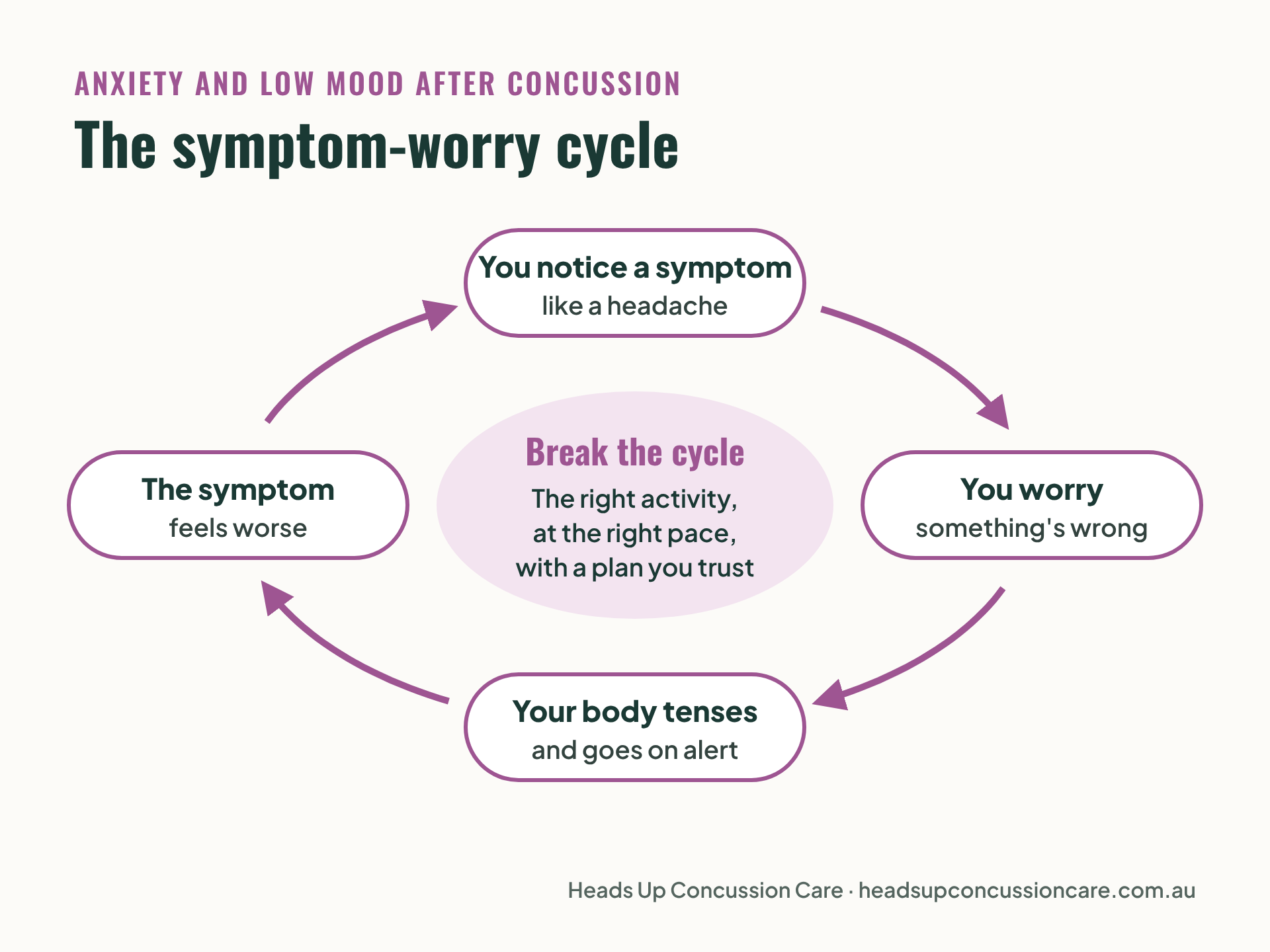
Symptoms and worry can feed each other. You notice a headache and worry it means something's wrong. The worry makes you tense and alert, which makes the headache worse. Then the headache causes more worry.
Habits can feed the cycle too:
- Avoiding activity for fear of making things worse can lead to deconditioning, isolation and low mood, which keep symptoms going longer.
- Pushing too hard to prove you're fine can trigger flare-ups, frustration and setbacks.
Breaking the cycle usually means finding the middle ground: doing the right amount of activity, at the right pace, with a plan you trust.
Common mood changes after concussion
- Feeling anxious, worried or on edge
- Low mood or feeling flat
- Irritability or a shorter fuse than usual
- Frustration with your recovery
- Feeling "not like yourself"
- Poor sleep
- Fear of making things worse, or avoiding activities
- Withdrawing from friends, family or your team
How we help with mood after concussion
Clear explanations. Understanding what's happening in your body is powerful. When you know why you're feeling a certain way, it's much less frightening.
Realistic goals. We set achievable steps so you can see your progress. Small wins add up and help rebuild your confidence.
A plan you can trust. Knowing there's a structured path forward, with someone in your corner, takes a lot of the uncertainty out of recovery.
Treating the other systems. Improving your sleep, energy, neck or balance often lifts your mood as well, because you start feeling better and doing more.
Relaxation and breathing. Techniques like box breathing, mindfulness and meditation help calm your brain's alarm system.
The right support. If your mood is affecting daily life, we'll help connect you with your GP or a psychologist. Getting that support is a normal, smart part of recovery, not a last resort.
When to get help straight away
If you're struggling, or having thoughts of harming yourself, please talk to your GP or call Lifeline on 13 11 14, any time. In an emergency, call 000.
The takeaway
Changes in mood after concussion are common, real and treatable. Looking after your mental health is just as important as looking after your physical symptoms, and the two often improve together. At Heads Up Concussion Care in Perth, you don't have to do it alone.
Don't wait to see if it settles on its own. Getting assessed early, ideally within the first few days after your concussion, gives you the best chance of a smooth recovery and lowers the risk of symptoms hanging around. Even in the early days, it's worth getting checked properly.
Want to learn more? See our concussion services, meet the team, or start with what a concussion actually is.
Book an appointment for a concussion assessment. No referral is required.
Trusted resources (Australia)
Common questions
- Is it normal to feel emotional after a concussion?
- Yes. Mood changes such as anxiety, irritability and low mood are a recognised part of concussion and usually improve with recovery.
- How long do mood changes last after a concussion?
- For many people they ease as other symptoms improve. If they last or affect daily life, talk to your GP or a psychologist.
- Can concussion cause personality changes?
- Many people feel "not themselves" for a while, with a shorter fuse or less patience. These changes are usually temporary and improve with treatment.
- Who can help with anxiety after a concussion in Perth?
- Your Heads Up physiotherapist can coordinate your care and connect you with your GP or a psychologist when needed.